
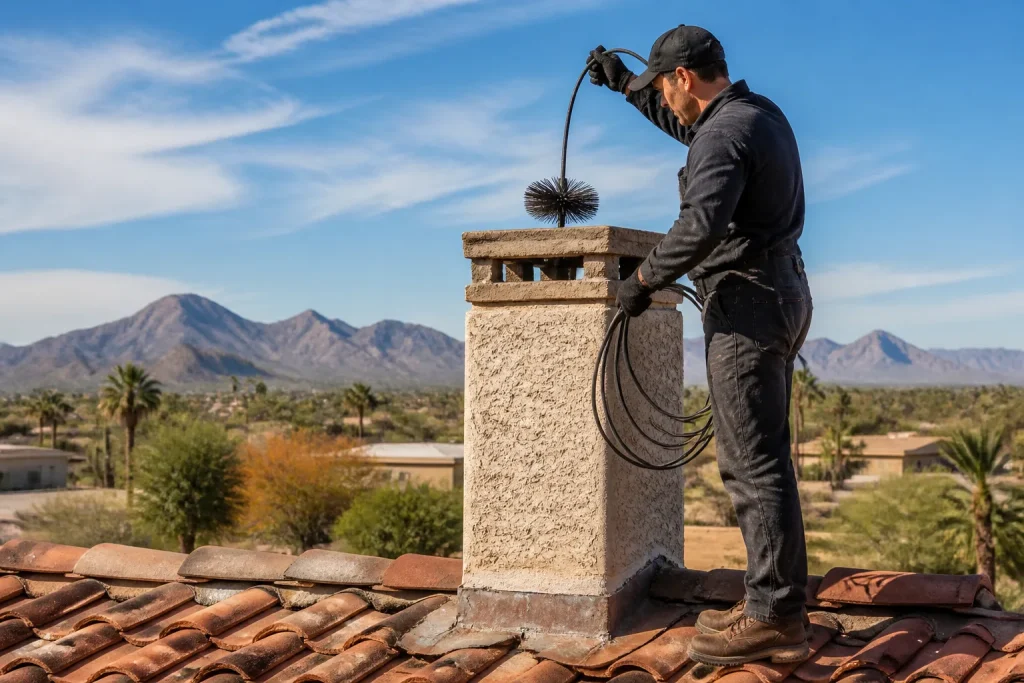
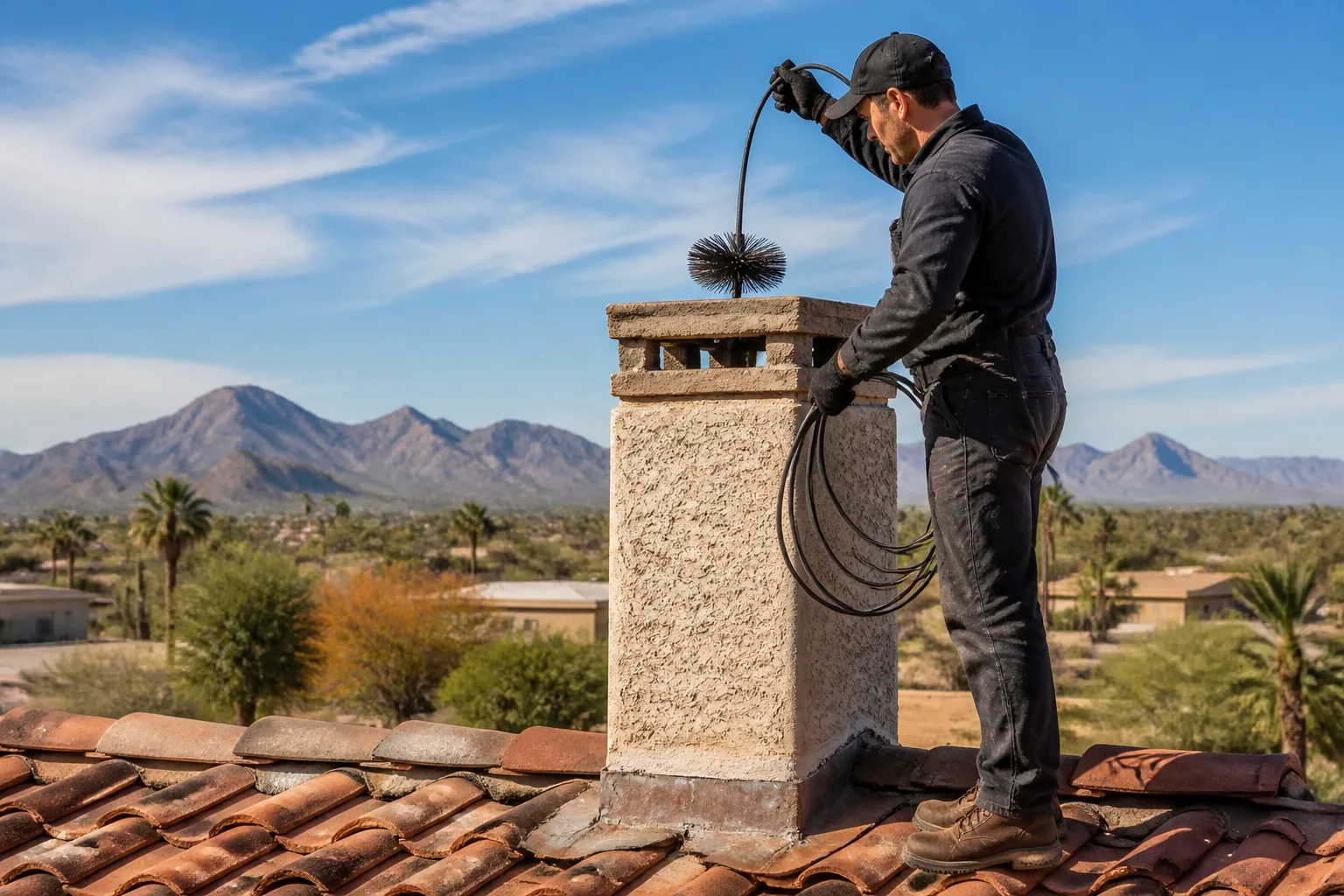
Olympia Chimney Chimney Sweep in Phoenix: A Homeowner’s Guide
Most Phoenix homeowners can’t tell a professional-grade chimney cap from the one sitting on a hardware store shelf, and that gap matters. When a company quotes a repair, the materials listed on the page are usually the difference between a fix that lasts and one you’ll repay inside a decade. We’ve watched too many jobs come apart because the parts underneath weren’t built for the system they sat on.
The confusing part is the name. People search for an “Olympia Chimney chimney sweep in Phoenix” expecting a single company. Olympia Chimney is a professional trade supplier of chimney components, not a local sweeping outfit. The products it makes show up inside quality repair work across the Valley. Understanding what those components do helps you read a quote with clear eyes. And if you’d rather skip the DIY research and get an expert assessment, call (855) 360-8261.
What Olympia Chimney Supply Actually Is
Olympia Chimney Supply is a trade supplier, meaning it sells to contractors and specialty shops rather than to homeowners wandering the aisles. That single fact tells you a lot. A company that buys from Olympia is sourcing from the same channels specification contractors use, the ones who put materials into working chimney systems every week. When we use Olympia Chimney products, it’s because that’s what the trade sources, not what was left on a shelf.
The distinction matters in Phoenix for a few reasons:
- Built for real systems. These components are designed around actual flue, cap and flashing dimensions, not adapted from general construction stock.
- Sourcing signals. A contractor who lists trade suppliers is usually one who expects the work to be inspected and to last.
- Parts availability. Trade-sourced components are the ones a future technician can match, which keeps a repair coherent years down the line.
None of this is a brand loyalty speech. It’s about what a part is engineered to handle. A cap sourced from a supplier that serves chimney contractors is built for weather, heat and time in a way a generic cover isn’t. That difference is invisible on the quote and very visible in year eight.
The Olympia Product Categories You’ll See in a Phoenix Repair
Phoenix chimney work leans on a handful of component types more than others. Sun, dry air and repeated heating and cooling cycles punish the wrong materials. Here’s what the common Olympia categories actually do in plain terms.
Chimney caps
A cap covers the flue opening and keeps out rain, debris and animals. It also affects draft. A well-made cap stays put through wind and holds its shape through heat. A cheap one warps, rusts or rattles loose, and then you’re paying to reinstall it. In Phoenix, the sun is relentless on anything left on a roof, which makes material quality on a cap a real durability question, not a cosmetic one.
Flashing systems
Flashing is the metal that seals the chimney where it meets the roof. On a low-slope or tile roof, a weak flashing job is where water gets in. A proper flashing system is fitted to the roof type, not bent from a generic sheet. When a contractor lists a trade flashing system, they’re telling you the roof-to-chimney seam is a designed joint, not a guess.
Crown coat sealants
The crown is the concrete or masonry cap at the top of the chimney. It sheds water away from the structure below. Crown coat sealant is a flexible, weather-resistant coating that protects that surface from cracking and taking on water. Phoenix’s intense sun and dry-then-wet swings are hard on masonry crowns, so a sealant built for the job extends the life of the crown and the masonry under it. HeatShield is also in our kit for resurfacing flues, and that’s a separate, evaluated decision from a crown coating.
Professional-Sourced Parts vs. Big-Box Alternatives
The lifespan gap is real. A trade-sourced cap or flashing system on a Phoenix roof can reasonably be expected to outlast a hardware-store substitute by a wide margin, and we’ve seen hardware-store caps fail inside a few years of Valley sun. What drives that gap comes down to a few things:
- UV stability. Phoenix gets intense sun. Materials designed for it hold their color and structure longer than bargain components that chalk, crack or rust.
- Thermal cycling. Hot days and cooler nights push materials to expand and contract. Parts built for that cycle hold their seals; cheaper parts distort.
- Fit and finish. Trade components are dimensioned for chimney systems, so a cap or flashing piece seats correctly instead of being trimmed and forced.
- Warranty alignment. Manufacturer warranties often depend on using approved components throughout a system. Mix a trade liner with a mismatch of cheap parts and you can void coverage on the good piece. That’s a quiet cost most homeowners never see coming.
Materials like Gelco and Famco come up in the same conversation. They’re professional-grade lines, and the point is consistency: the same quality of part through the whole system. A great cap on a poorly sourced flashing job is only as good as its weakest joint.
Questions to Ask Before You Sign a Repair Quote
A quote is a document, and a good one tells you what you’re buying. Before you sign anything, ask the person holding the clipboard a few direct questions. A competent contractor answers them without flinching. A corner-cutter gets vague.
- What brands are on this quote, and why those? If the answer is “whatever the supplier had,” press further. Trade-sourced names like Olympia Chimney or HeatShield are a good sign.
- Is the whole system matched? Ask whether the cap, flashing and any liner work come from approved components. Mixed sourcing can void warranties.
- Will you show me the photos? A camera inspection with a photo report lets you see the actual condition of the flue before anyone recommends work.
- What’s the written estimate, and what does it cover? The price should be fixed in writing per job, with materials and labor spelled out.
- Can you tell me honestly if this can wait? A straight answer here is worth more than a fast one.
We’ll tell you plainly when a repair can safely wait and when it shouldn’t. That honesty is the whole point of sourcing good materials in the first place. If you want that kind of assessment, our chimney sweep visit includes a look at the flue and cap, with photos you keep.
When It’s Time to Call a Pro
Some chimney problems are safe to eyeball from the ground. Others need a trained eye and a camera. Call in a professional when you notice any of these:
- Creosote buildup that’s more than a thin film, especially if it looks glazed or tar-like.
- A cap that’s missing, loose, rusted through or visibly warped.
- Water staining on the ceiling or around the chimney where it meets the roof.
- Draft problems: smoke rolling back into the room, or a fireplace that’s hard to light.
- Any crack in the crown or masonry that’s letting water in.
Working around a hot flue or a roof edge is genuinely dangerous, so we don’t hand out step-by-step instructions for climbing up there. That’s a job for someone with the right tools and a camera. In Phoenix, Phoenix homes with aging chimney systems are exactly the ones that benefit from a professional look before small problems become expensive ones. Lifetime dryer vent cleaning is part of the same conversation, since a clogged vent is a fire risk in the same way a dirty flue is. And if your flue needs resurfacing, HeatShield can restore a damaged liner without the cost of a full replacement, when the damage qualifies. We’ll tell you honestly which one you need.
Related services in Phoenix: chimney sweep and inspection, dryer vent cleaning, and chimney repair, all handled by the same team. Learn more about our full scope at Phoenix Chimney Cleaning.
The Bottom Line
Olympia Chimney Supply is a trade supplier, and its products are a signal that a contractor sources the way the trade does. The components you’ll see most often in Phoenix repairs are caps, flashing systems and crown coat sealants, all built for sun, heat and thermal cycling. Trade-sourced parts outlast big-box substitutes, and matched components keep your warranty intact. Before you sign, ask what brands are on the quote, whether the system is matched, and whether you’ll get photos of the actual condition. Photos you can see for yourself are the best protection against a quote you can’t verify.
If you’re in Phoenix and need help, Phoenix Chimney Cleaning offers free estimates. Call (855) 360-8261. We answer 24/7. Fast dispatch from 7am to 7pm, Sunday through Friday.
Frequently Asked Questions
A chimney sweep is priced per job by a written estimate. Because no two flues are the same thickness of creosote or the same condition, we quote after looking. Estimates are free, so you’ll know before any work begins. Call (855) 360-8261 for an exact quote.
No. Olympia Chimney Supply is a professional trade supplier of chimney components, not a local sweeping business. When you see Olympia products in a repair, it’s a sign the contractor sourced from trade channels rather than a general construction supplier. We use Olympia Chimney parts because that’s what professional contractors specify.
A missing or failing cap can let rain, debris and animals into the flue, and a degraded flashing joint is a common entry point for water at the roof. Whether the repair can wait depends on condition, and we won’t recommend it without photos you can see. Call (855) 360-8261 to book an assessment.
It can. Many liner and cap manufacturer warranties depend on approved components being used throughout the system. Mix a trade-sourced liner with cheap mismatched parts and coverage on the good piece can be at risk. Ask any contractor whether their sourcing is matched, and get it in writing.
Creosote builds up over time, and thick or glazed creosote is a chimney-fire risk. Skipping the sweep also means small cap, crown and flashing problems go unnoticed until they cost more to fix. A sweep with a camera inspection catches both early. Call (855) 360-8261 for a free estimate.
Written by the team at Phoenix Chimney Cleaning, serving Phoenix since 2012.
Need Chimney Cleaning Help?
Call Phoenix Chimney Cleaning - licensed & insured, here with fast help in Phoenix.
(855) 360-8261