
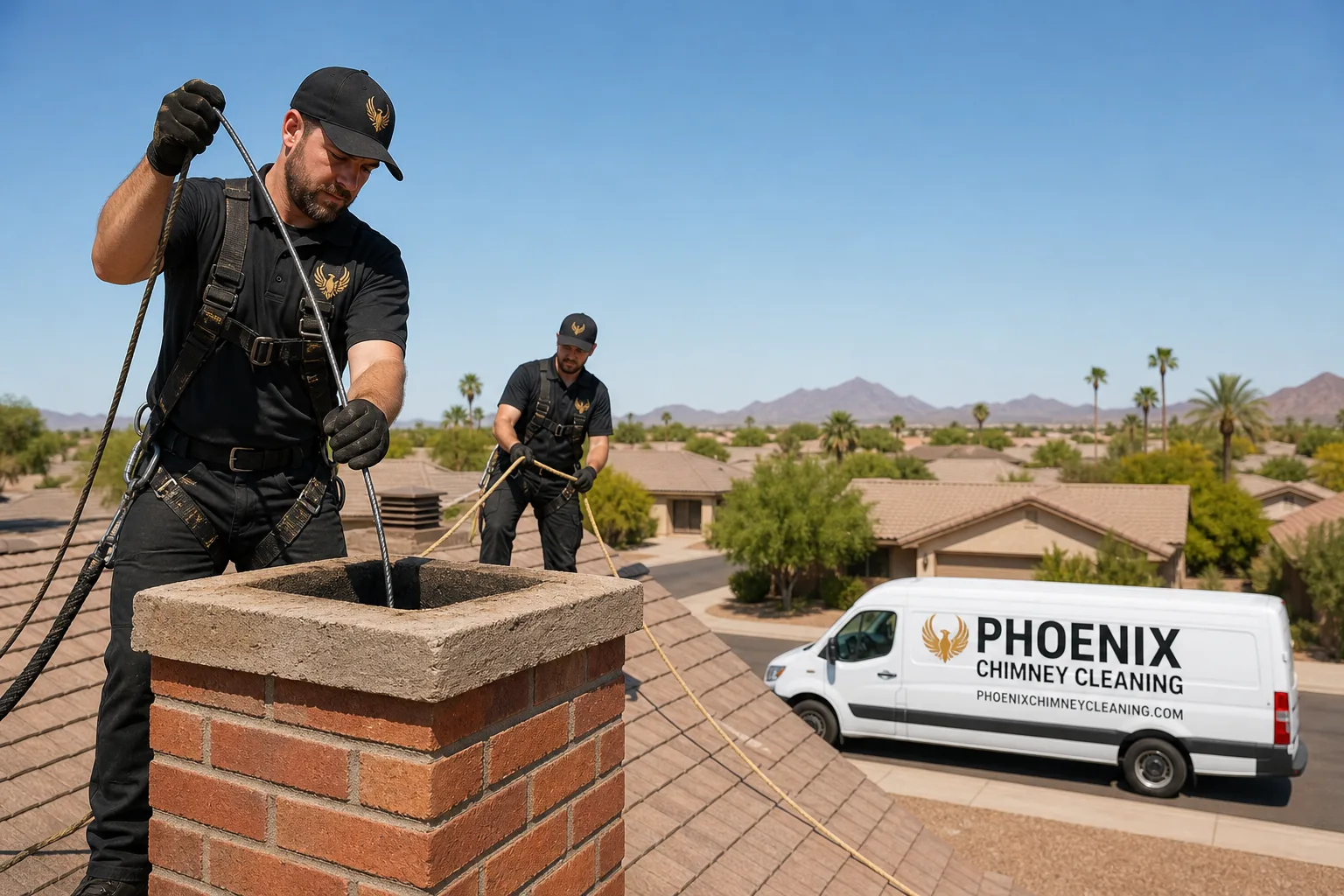
 Sweep & inspection
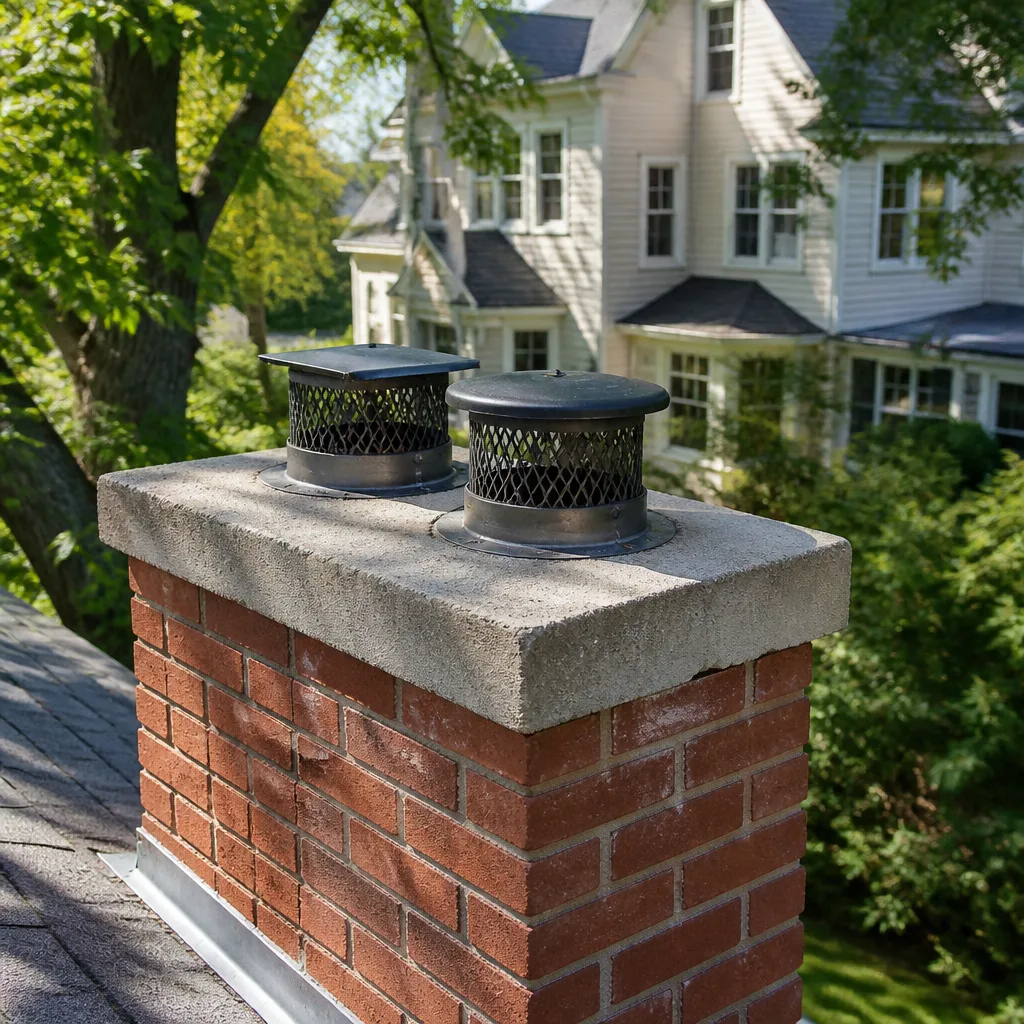
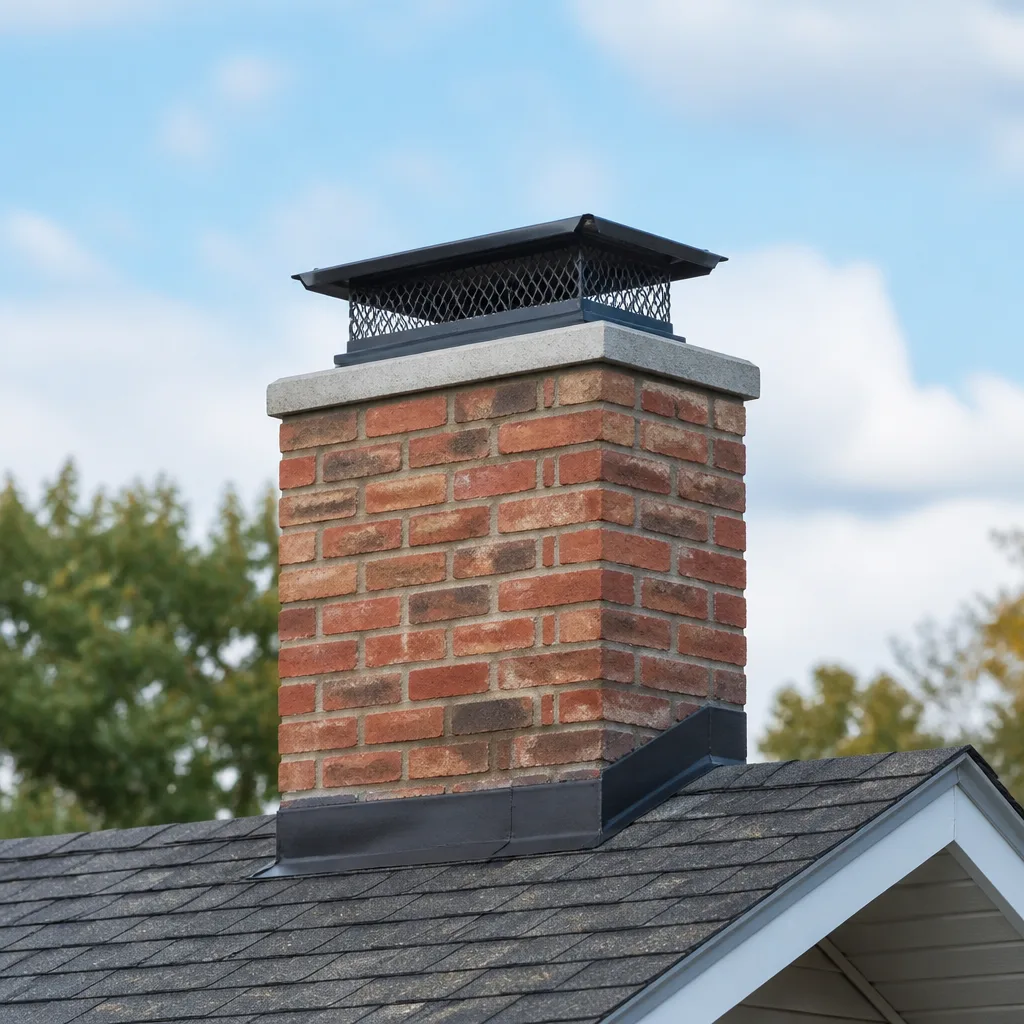 Caps & crowns
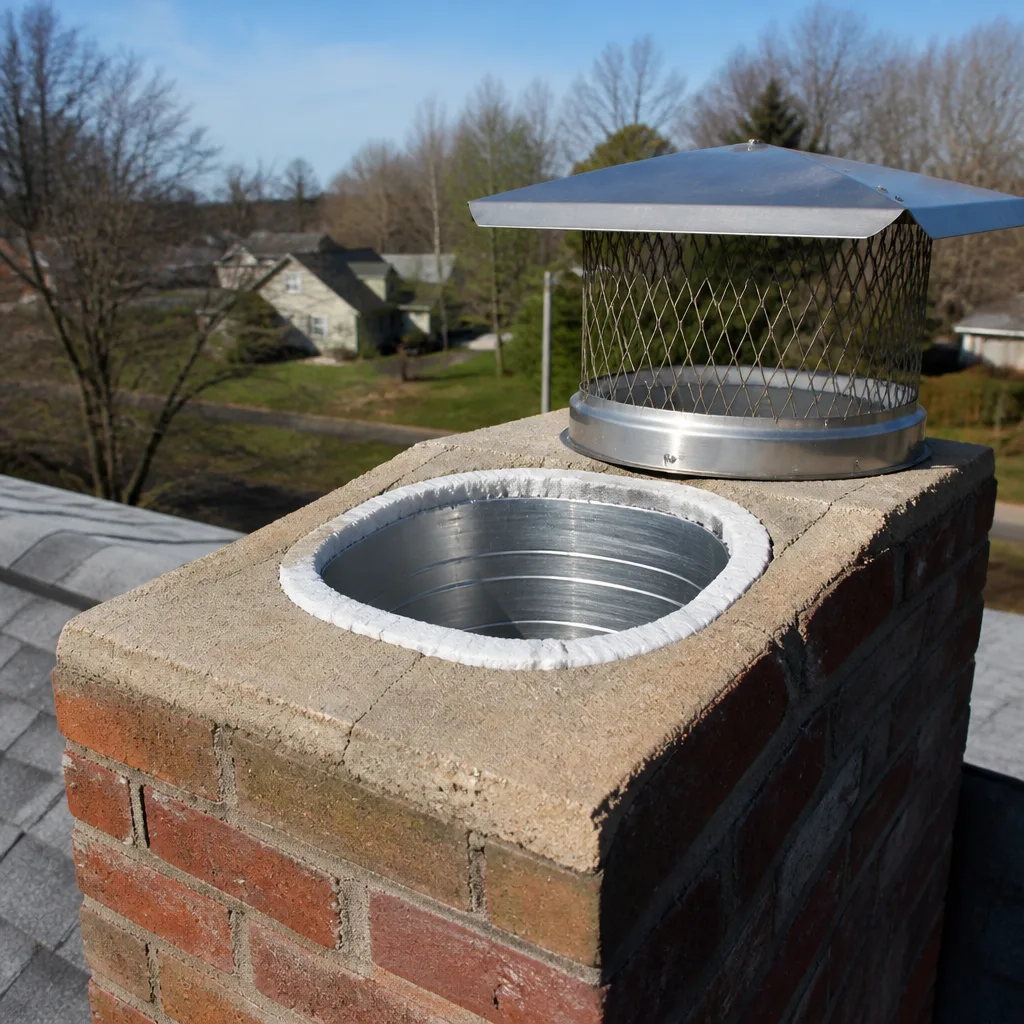 Flue relining
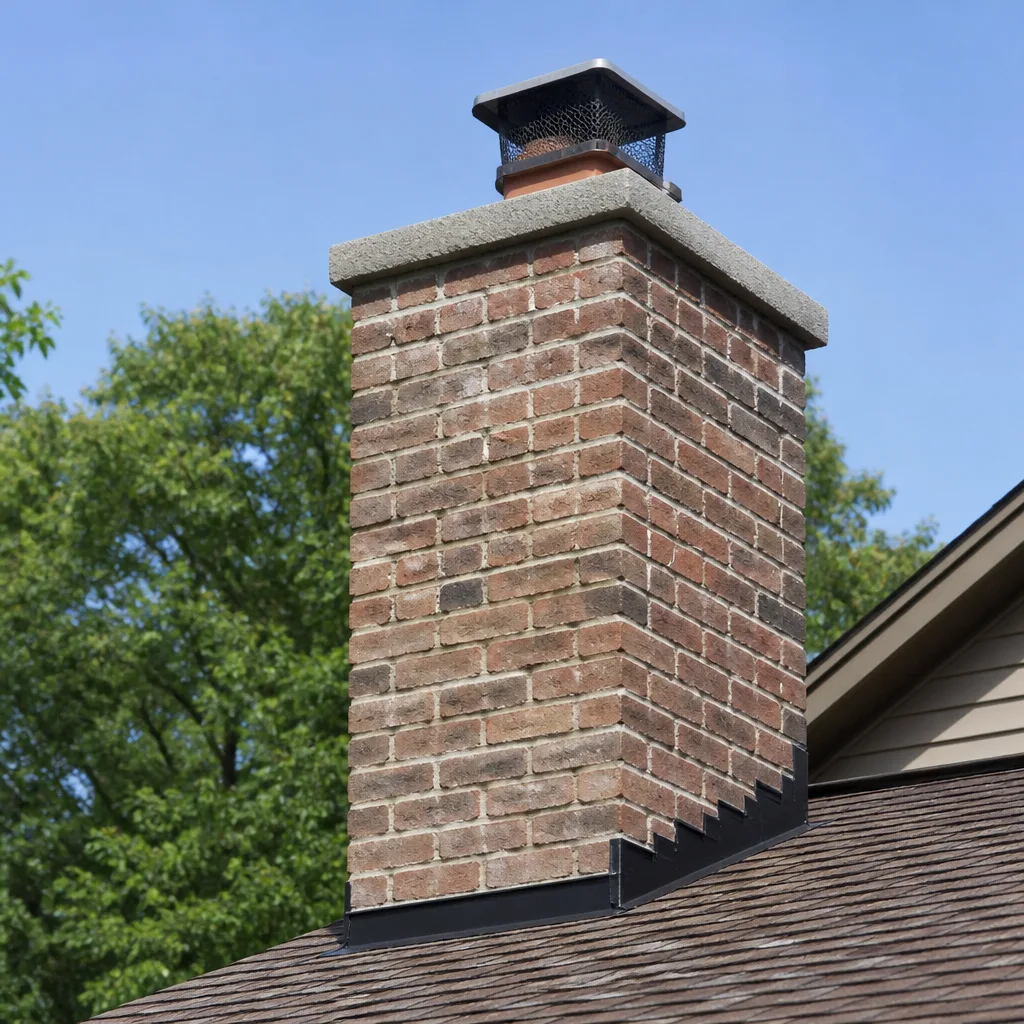 Masonry repair
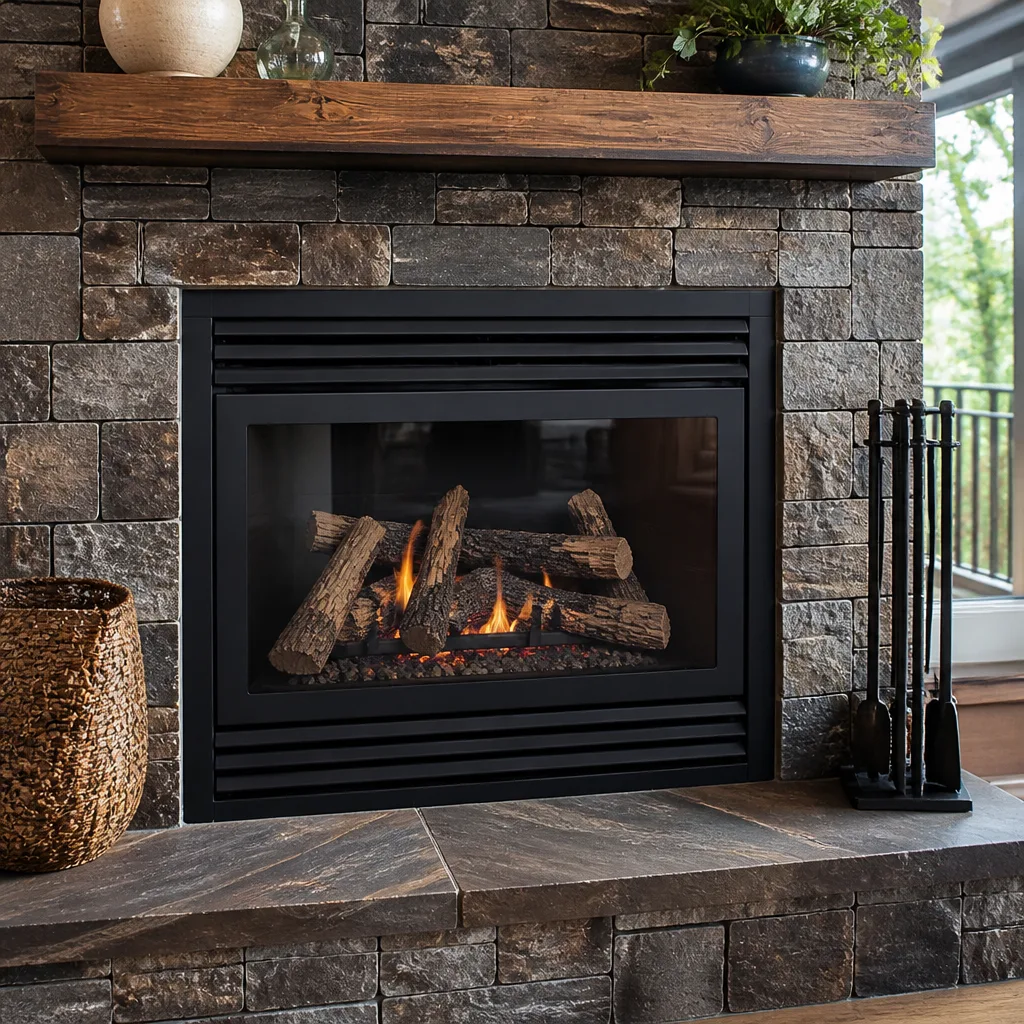 Gas fireplace service
Level 1 sweep and inspection to the NFPA 211 annual standard - flue, crown, cap, and flashing checked and photographed
Chimney sweep logs do not sweep chimneys. They loosen some creosote - which then falls where a brush and vacuum still have to collect it.
Trusted Chimney Sweep for Phoenix Homeowners
If you burn wood in the Valley, your flue is collecting creosote and soot right now, and the mild winter here means burning season starts sooner than most people plan for. Getting a chimney checked before that first fire is the difference between a clean draft and a blocked flue. Phoenix Chimney Cleaning has handled Phoenix Chimney Cleaning work since 2012, with Bob Conway leading a crew that sweeps, inspects and repairs the same system in one visit. We use professional-grade materials from HeatShield, Gelco and Olympia Chimney, not hardware-store substitutes. We’ll tell you plainly if your chimney can wait a season, and we won’t recommend work we can’t show you on camera. Call (855) 360-8261. We answer 24/7.
Chimney Sweep Services
Chimney Sweep Services covers everything from the firebox to the top of the flue: removing soot and creosote, brushing the smoke chamber, checking the damper and cap, and inspecting the liner for cracks or gaps. You need this if you’ve burned a season or more without a sweep, if smoke backs into the room, or if you’ve never had the chimney looked at since moving in. In Phoenix, where the burning season is short and intense, creosote builds in a concentrated run and hardens fast. We sweep with rotary brushes sized to your flue, then run a camera to confirm the liner is intact. Most standard sweeps here are booked by written estimate; once we see the flue we’ll give you a flat price for the job and put it in writing before we start.
What a Rotary Sweep Covers
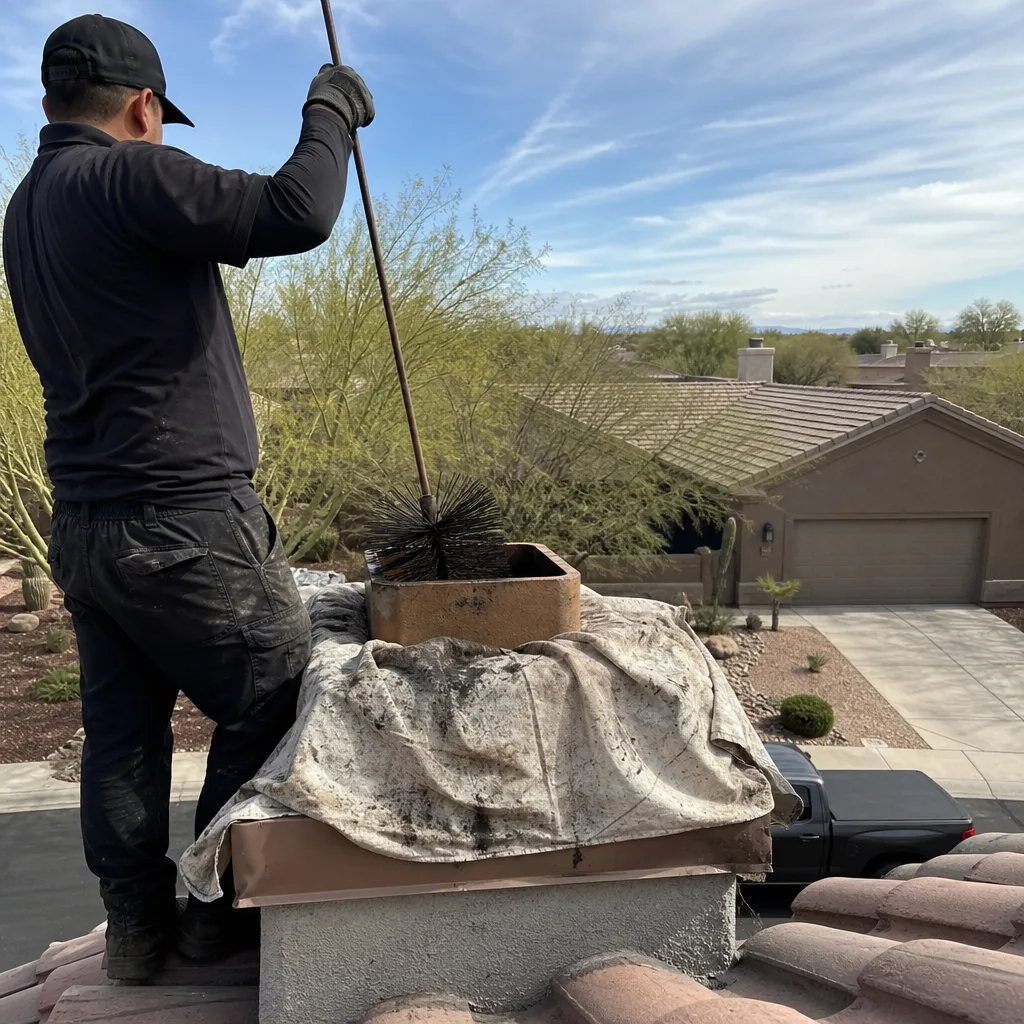
A rotary sweep uses a powered brush that follows the shape of the flue instead of a hand brush that only scrapes where it reaches. We cover the firebox, smoke shelf, smoke chamber and flue in one pass, then vacuum with a HEPA unit so nothing settles in your living room. The camera inspection that follows is what tells us whether the liner is sound or needs attention.
When a Standard Sweep Isn’t Enough
If the flue has heavy glazed creosote or a cracked clay liner, brushing alone won’t solve it. That’s where HeatShield resurfacing or a DuraFlex liner comes in, and we’ll explain which one fits your chimney rather than pushing the bigger job. If sweeping is all you need, that’s all we’ll quote.
Styles & brands we work with
- Sweep & inspection
- Caps & crowns
- Flue relining
- Masonry repair
- Gas fireplace service
Chimney Cleaning
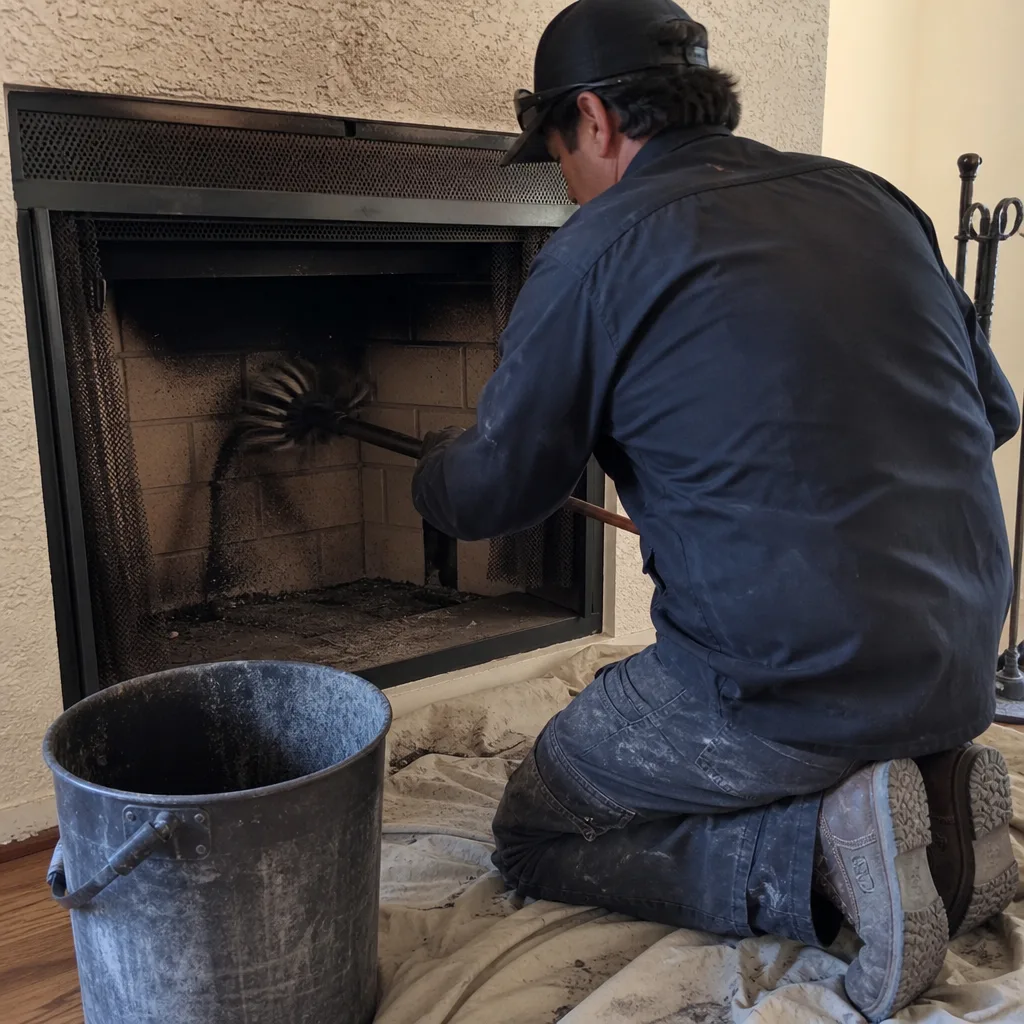
Chimney Cleaning is the deeper clean that follows a sweep when soot has worked into the smoke chamber, the damper assembly, or the firebox brickwork. It makes sense once a year for wood burners, and it’s worth booking before the season starts rather than mid-winter when the flue is already loaded. Our Phoenix crew cleans the firebox and smoke chamber by hand and brush, removes ash, and checks that the damper opens and closes cleanly. We bring drop cloths and a HEPA vacuum so the room stays as it was. Pricing depends on flue size and soot load, and you’ll get a written estimate before any work begins. If we find a problem the camera shows plainly, we’ll show you the photos and tell you when it can wait and when it can’t.
Wood-Burning Fireplaces
Wood fires leave the heaviest deposits, especially when the wood is unseasoned or the damper is throttled too far. We clean the firebox, grate area and smoke shelf, then run a camera up the flue to see what the brush can’t reach. If the creosote is glazed, we’ll say so and explain the options.
Prefab and Insert Units
Factory-built fireplaces and inserts have tighter clearances and specific flue shapes, so the brush and technique have to match the unit. We clean around the insert collar and check the cap and spark screen, both of which collect debris in a desert climate. A blocked cap is one of the more common causes of a smoky fire here.
Fireplace Cleaning
Fireplace Cleaning focuses on the part of the system you see and touch: the hearth, firebox walls, glass doors, screen and the surrounding masonry or surround. It’s the clean you book when the fireplace looks tired, smells smoky when it’s cold, or has sat unused through a summer of dust. In Phoenix homes the fireplace often goes months without a fire, and that idle stretch is when ash residue and dust settle and draw pests. We vacuum the firebox, wipe down the surround and glass with products safe for the finish, and check the firebox seams for gaps. Cost tracks the fireplace type and level of soil, and we set a flat price in writing before we start. If a routine clean turns up a cracked firebox panel or a failing damper, we’ll tell you and show you why.
Glass Doors and Screens
Glass doors haze with soot and creosote film that ordinary cleaner won’t cut, and screens collect ash that dulls the draft. We clean both and check the gasket on the doors for a tight seal. A warped gasket lets smoke past the doors and into the room.
Masonry and Surround
Brick and stone surrounds hold soot in the pores, and smoke staining on the face usually points to a draft problem upstream. We clean the surface and note where staining recurs so we can trace the cause. That’s often a cap issue, not a cosmetic one.
Chimney Services
Chimney Services is the full scope of what our team handles beyond a basic sweep: inspection, repair, relining, and dryer vent cleaning as a primary service rather than an add-on afterthought. You need these when the chimney has visible damage, when the camera shows a failing liner, or when your dryer is taking two cycles to finish a load. We work with HeatShield, DuraFlex, Gelco and Famco materials, the same lines specialty contractors specify. That means when a flue needs resurfacing or relining, we can do the job rather than refer you out. Repair pricing is set per job by written estimate after we’ve seen the damage, and sweeping is quoted separately so you know exactly what you’re paying for and why.
Repair and Relining
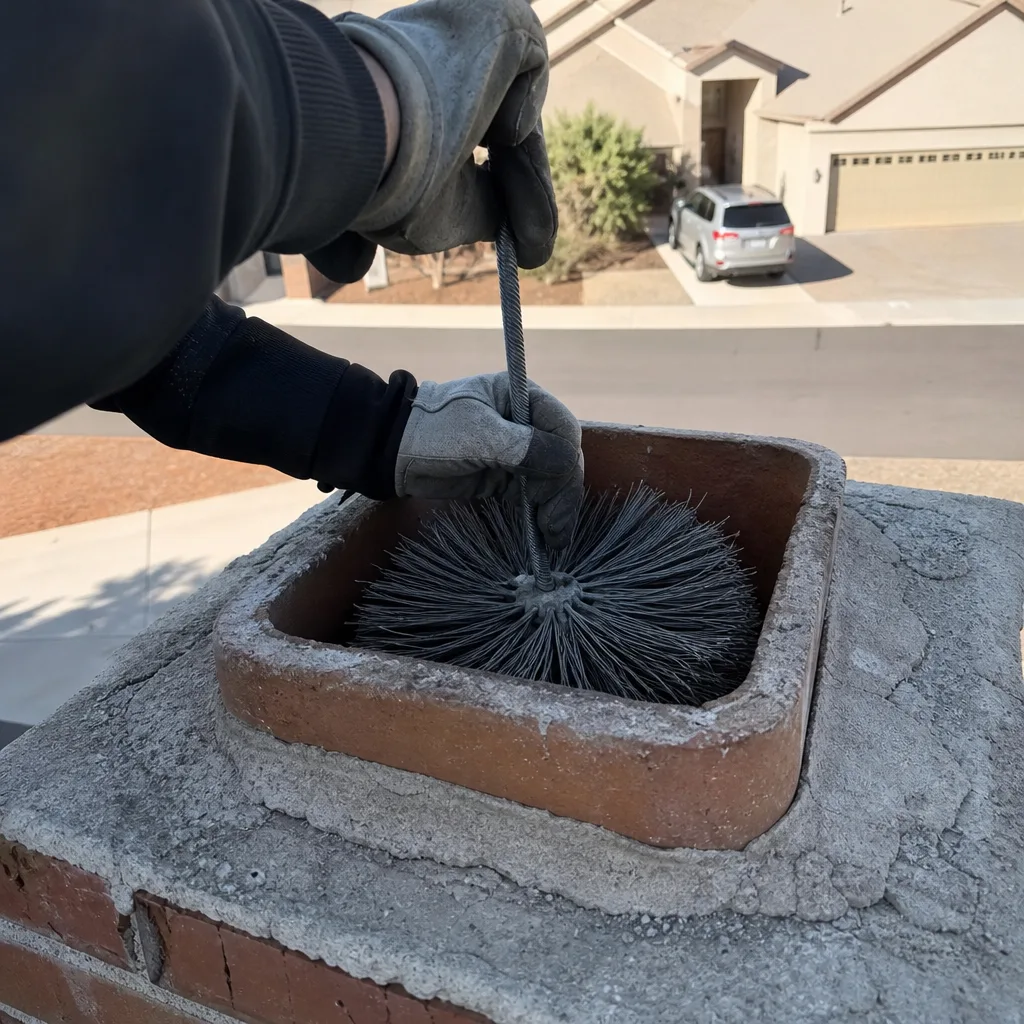
HeatShield resurfacing can restore a damaged liner in place when the cracks qualify, which avoids the cost of a full replacement. When the liner is too far gone, a DuraFlex flexible liner is the proper fix. We’ll tell you honestly which one your chimney needs.
Dryer Vent Cleaning
Dryer vents are a venting problem like a chimney, and lint buildup is a leading cause of household fires. We clear the run from the dryer to the outside cap and show you what came out. It’s a core service here, not a side job.
Chimney Sweep Certified
Chimney Sweep Certified work means the technician inspecting your flue has the training and equipment to read what the camera and a hands-on look reveal, and to recommend the right fix rather than a guess. It matters most when someone has already told you the chimney needs thousands of dollars of work and you have no way to verify it. Our approach is to show you the evidence: the camera footage, the photos, the condition of the liner and cap. Bob Conway leads a crew trained on HeatShield application and DuraFlex liner installation, so the assessment and the repair come from the same hands. Certification and licensing details are confirmed on request; we won’t quote credentials we can’t document. A certified sweep is what turns a routine cleaning into a real evaluation of the system.
What Certification Covers
Certified training covers flue inspection, creosote identification, liner assessment and safe sweeping technique for wood, gas and prefab systems. It’s the difference between someone who brushes a flue and someone who understands why it failed. Ask any sweep what they’re qualified to do beyond the brush.
Documenting What We Find
We photograph the flue, liner and cap during the inspection and can share those images with you. Camera evidence is what lets you verify a recommendation instead of taking it on trust. If there’s nothing to fix, the report will say so.
Gas Fireplace Cleaning
Gas Fireplace Cleaning addresses the parts a wood sweep never touches: burners, logs or glass media, pilot assembly, and the vent path. Gas units still need attention even though there’s no creosote, because dust, lint and insect debris collect in the burner ports and vent and affect how the fire burns. In a Phoenix home the fireplace may sit unused for years, and that idle time is when blockages form. We clean the burner and ports, check the vent and termination cap, and confirm the unit vents properly. Gas work is no place for a DIY attempt; if the burner assembly or gas line needs service, a trained technician handles it. Pricing is set per job by written estimate. If the unit needs a part beyond our scope, we’ll tell you straight rather than improvising.
Burners and Media
Clogged burner ports cause uneven flames, sooting and a lazy fire that looks wrong. We clean the ports, clear the media, and check for soot streaks that point to incomplete combustion. A dirty burner isn’t just cosmetic; it’s a sign the unit isn’t venting or mixing fuel correctly.
Vent and Termination Checks
Direct-vent and B-vent gas fireplaces exhaust through a cap that collects dust and debris, and a blocked cap affects draft and safety. We inspect the run and the cap and clear what’s blocking it. Carbon monoxide risk is real for any gas appliance, so the vent path gets checked every visit.
Chimney Maintenance
Chimney Maintenance is the habit of checking the system before each burning season rather than waiting for a problem to show up. Annual sweeping and inspection is the baseline for a wood-burning chimney, and a gas fireplace benefits from an occasional look at the burner and vent. For Phoenix homes, the smart time to book is late summer or early fall, before the first cool evening has you lighting a fire. Our maintenance visit includes a sweep, a camera inspection, a cap and damper check, and a written summary of the chimney’s condition. We use it to catch small issues early, before a cracked liner or a loose cap turns into a repair. You’ll get a flat price in writing before we begin, and a plain answer on whether anything needs doing now or can wait a season.
Booking Around the Season
Most Phoenix homeowners light the first fire when the weather turns, which is exactly when everyone else calls too. Booking in late summer means the flue is clean and inspected before you need it. A chimney that sat idle all summer should be checked before the first burn.
What We Check Each Visit
We look at the liner, cap, damper, firebox seams and the exterior crown and flashing, then compare against the last visit. Small changes over time tell us a lot about how the chimney is aging. That record is what keeps a system from failing without warning.
Brands We Service
We service HeatShield lining systems and know how the resurfacing compound wears and where it needs to bond cleanly to hold. We also work with Gelco products, which is a familiar line in professional chimney repair, and we’ve learned where those materials perform best. Whether it’s a sweep, a resurface or a full reline, the material choice matters as much as the labor.
We also service DuraFlex liners and Olympia Chimney products, and we know where flexible liners wear or lose their connection at the top plate. Famco is another line we handle, and familiarity with these brands is what lets us match the right material to the chimney instead of forcing one system onto every flue. Whether you have HeatShield, Gelco, Olympia Chimney, Famco or any other make, we can help.
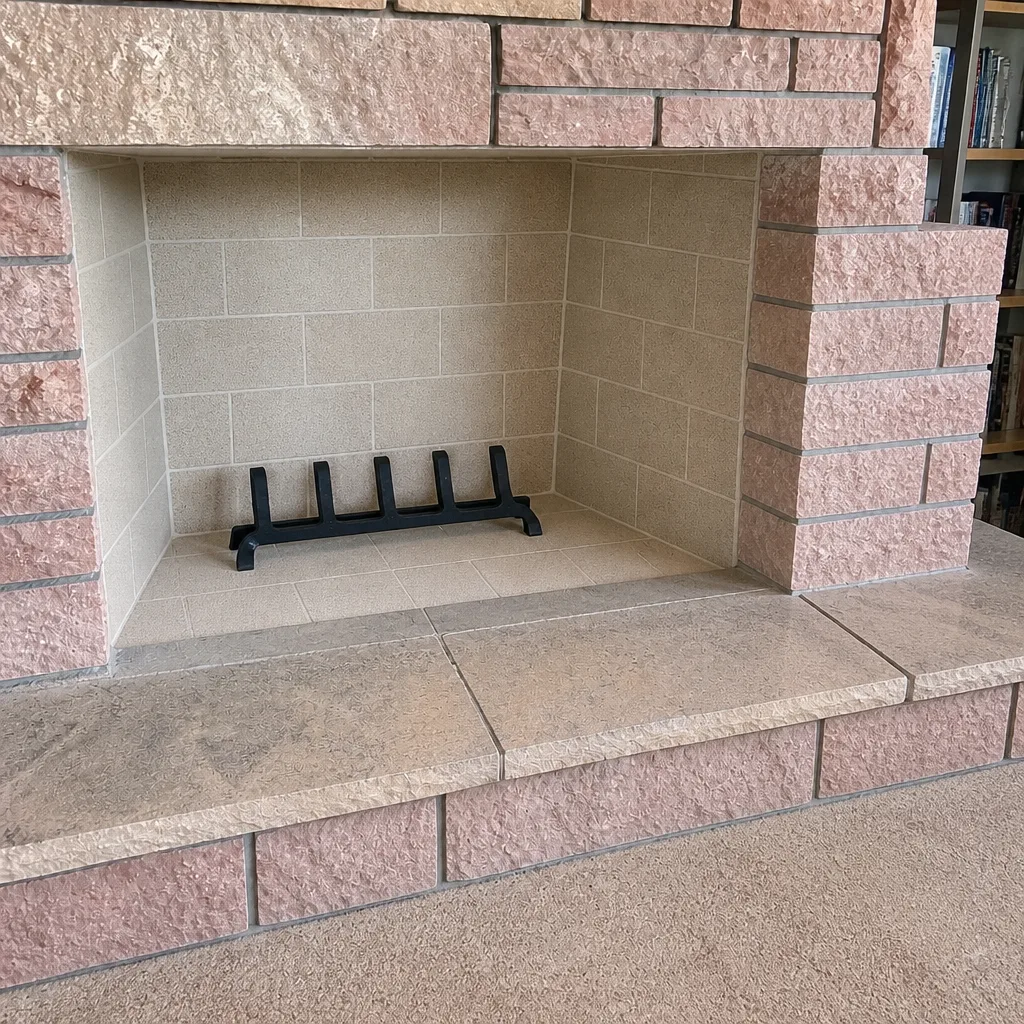
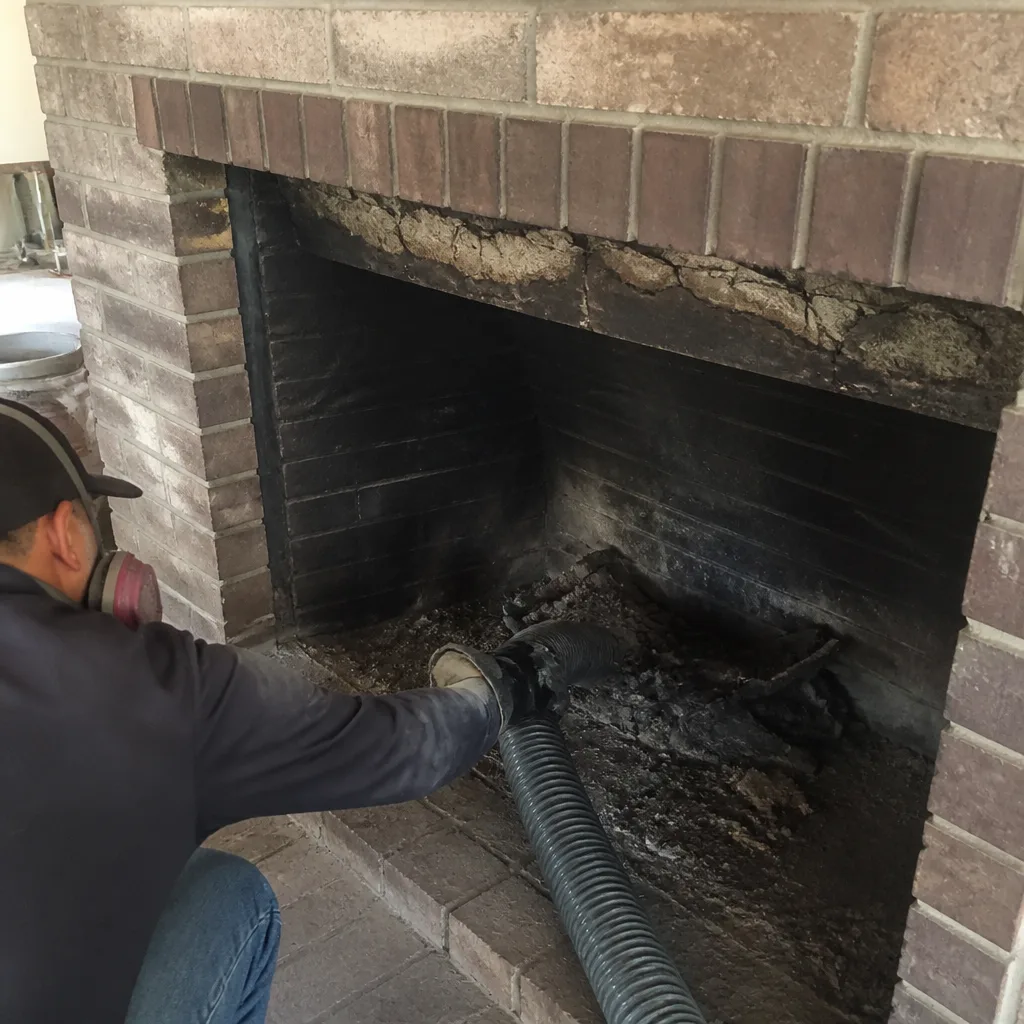
See the difference
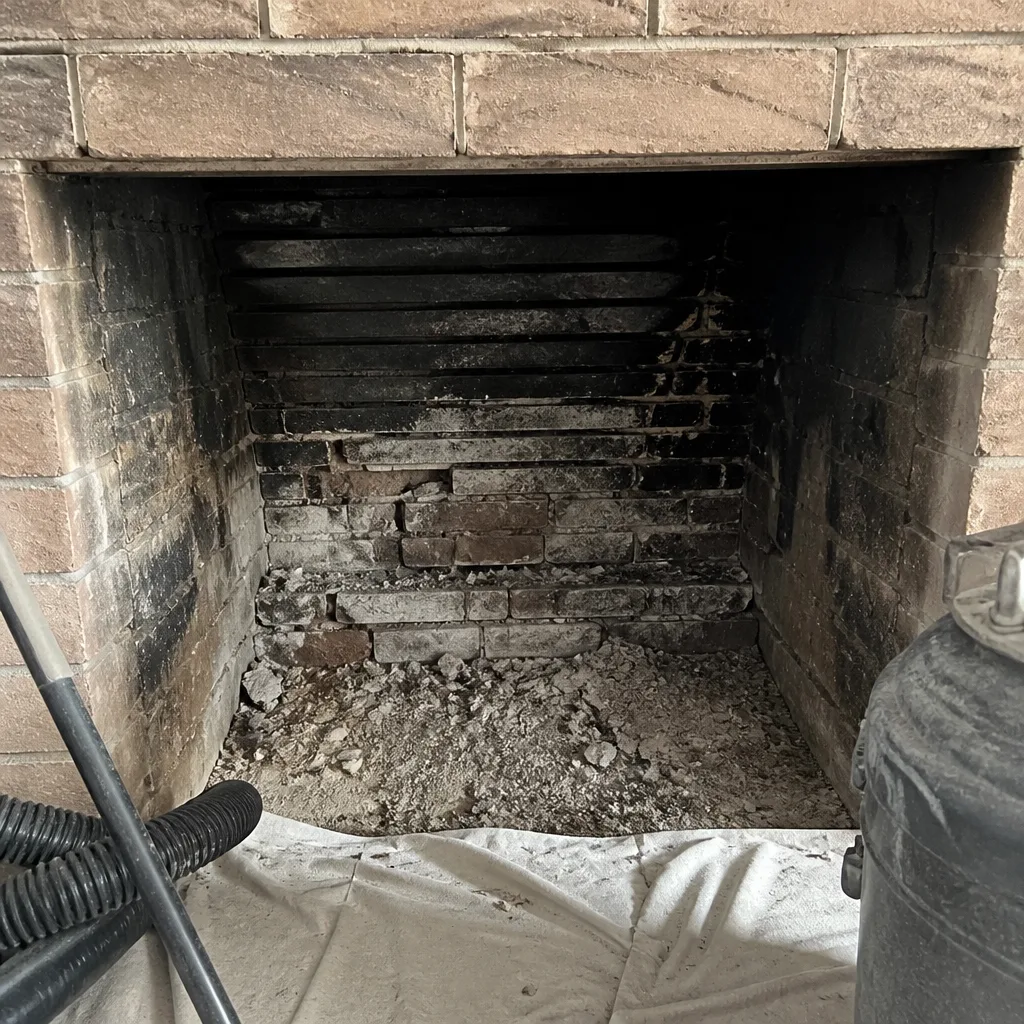 Before
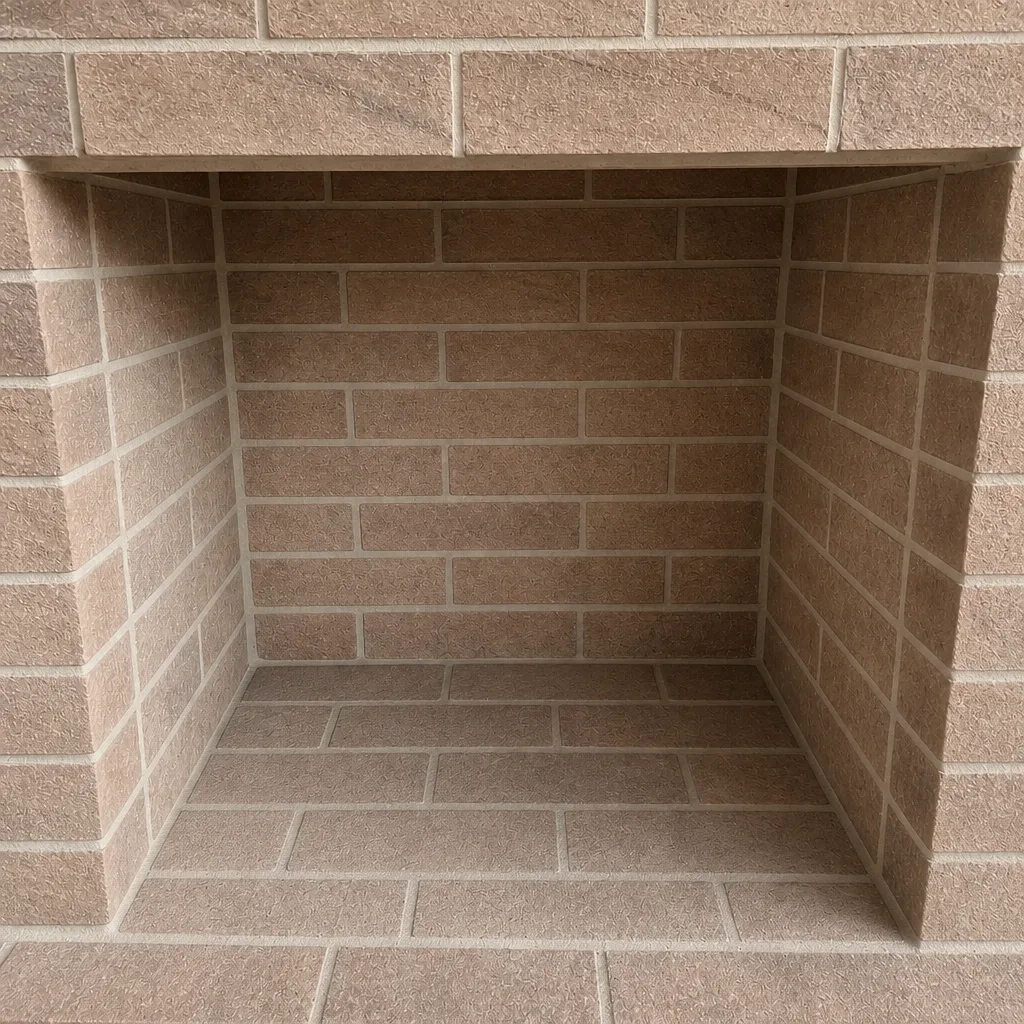 After
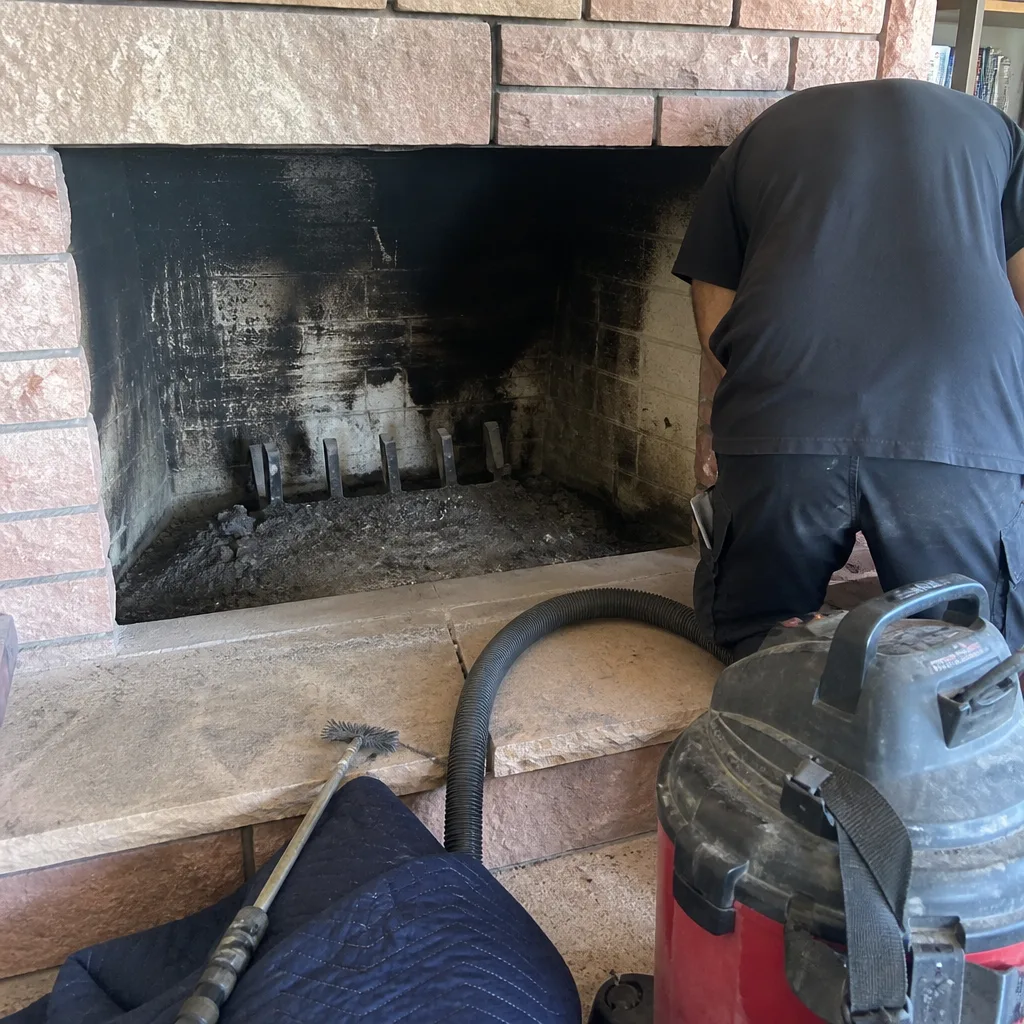 Before
 After
 Before
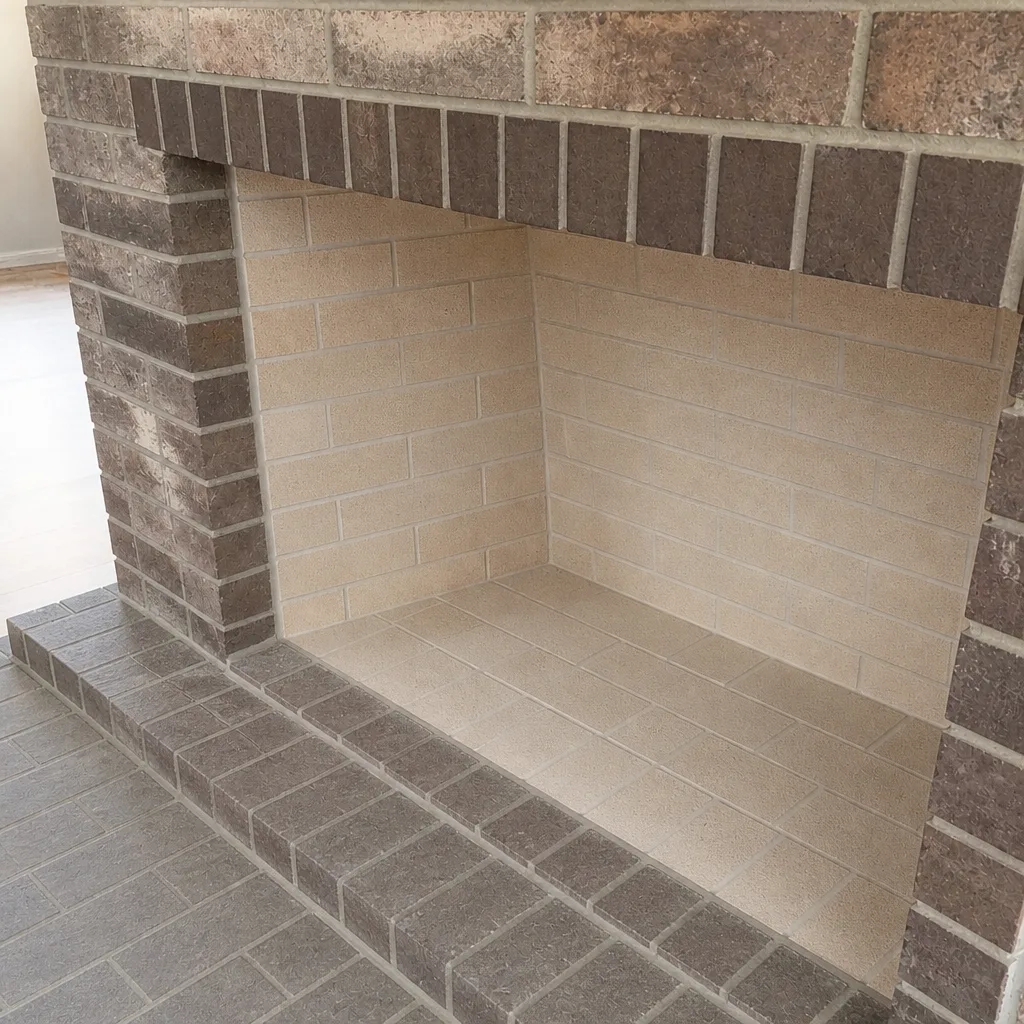 After
Signs You Need a Pro Right Now
- Smoke rolling back into the room. Backdraft usually means a blocked flue, a failing cap or a closed-up smoke chamber. It’s a draft problem that a camera inspection will pin down, and it gets worse the longer it’s ignored.
- A strong smoky smell when the fireplace is cold. Creosote and soot hold odor that comes back when the flue is damp or idle. That smell is a signal the chimney needs a real clean, not just an air freshener.
- Visible cracking or gaps in the firebox. Cracks in the firebox or smoke chamber can let heat and gases past the liner. Have a trained technician look before you light another fire.
- Soot on the glass, surround or mantel. Soot outside the firebox points to incomplete combustion or a venting problem. It’s worth a prompt check, especially on a gas unit where carbon monoxide is the concern.
- Debris or animals at the cap. Birds, rodents and leaves nest in open flues and caps in this climate. A blocked cap kills draft and can force smoke back into the house.
Our Process, Step by Step
- 1
Book the visit. We set a time, confirm what kind of fireplace you have, and tell you what to move off the hearth beforehand. The phone line is open around the clock for scheduling.
- 2
Protect the room. We lay drop cloths and set up a HEPA vacuum before any brush goes in. Keeping the soot contained is part of the job, not an afterthought.
- 3
Sweep the flue. We run rotary brushes sized to the flue through the firebox, smoke chamber and liner, clearing soot and creosote. The vacuum runs the whole time so nothing escapes.
- 4
Inspect with a camera. A camera goes up the flue to check the liner, joints and cap, and we photograph anything that needs attention. This is where we see what a brush alone can’t.
- 5
Explain and quote. We show you what we found and tell you plainly what needs doing now and what can wait. If repair is needed, you get a written estimate before we start.
How Much Does Chimney Sweep Cost in Phoenix?
Most chimney sweeping in Phoenix is priced per job once the crew sees the flue, so treat any number as a typical range and let the written estimate set the final price. A standard wood-burning sweep generally costs in the low-to-mid hundreds, a deeper clean that includes the smoke chamber and heavy soot load runs a bit more, and a gas fireplace clean falls in its own band depending on burner and media condition. Dryer vent cleaning is quoted separately.
What moves the price: flue length and diameter, how much creosote has built up, whether the flue is accessible from the roof, and whether the unit is wood, gas or prefab. Heavy glazed creosote or a damaged liner shifts the job from a sweep to a repair, and that’s a different quote entirely.
- Standard wood sweep: low-to-mid hundreds, depending on flue size and soot load.
- Deeper clean with smoke chamber: more than a basic sweep, reflecting the extra time and soot.
- Gas fireplace clean: its own range based on burner and vent condition.
- Liner repair or reline: quoted per job after camera inspection, not before.
How to avoid overpaying: ask for the price in writing before work starts, ask to see the camera footage if a repair is recommended, and be wary of anyone who quotes a liner replacement without showing you why. Our estimates are free and there’s no obligation. If the chimney only needs a sweep, that’s what we’ll quote.
Our Service Area Near Phoenix
We serve Phoenix and the communities around it, including Paradise Valley, Sun City, Youngtown, Tolleson, El Mirage, Guadalupe, New River, Carefree and Citrus Park. If you’re outside the city, book a chimney sweep in Carefree or a chimney sweep in Citrus Park and we’ll come to you. Dispatch runs 7am to 7pm, Sunday through Friday. Call (855) 360-8261 to book.
Serving Phoenix, AZ – Our Local Coverage Area
We serve Phoenix and nearby communities. Use the map below to see the area we cover. If you’re nearby, we can almost certainly help.
Frequently Asked Questions About Chimney Sweep in Phoenix
A chimney sweep is a trained technician who removes soot and creosote from the flue, firebox and smoke chamber and then inspects the chimney for damage. It’s more than brushing: a proper sweep includes a camera check of the liner so you know the system is sound. We handle wood, gas and prefab systems across Phoenix. Call (855) 360-8261 for a free estimate.
A routine sweep usually takes about an hour, and a deeper clean or a camera inspection that turns up damage takes longer. The time depends on flue size, soot load and access. We’ll give you a realistic window when you book. Call (855) 360-8261 to schedule.
Pricing is set per job by written estimate, and a standard sweep typically runs in the low-to-mid hundreds depending on flue size and soot. A gas clean or a heavier wood clean falls in its own range. The written estimate is the final price, and estimates are free. Call (855) 360-8261 for an exact quote.
Yes. We work with HeatShield resurfacing, DuraFlex liners, Gelco and Olympia Chimney products, and we know where each performs and where it wears. That lets us recommend the right material for your flue instead of a one-size approach. Whether it’s a sweep or a reline, we can help.
Same-day service is often possible when you call early in the day. We dispatch crews from 7am to 7pm, Sunday through Friday, and we’re closed on Saturday. For a same-day slot, call (855) 360-8261. We answer 24/7, and a call outside dispatch hours is booked into the next opening.
Warranty terms depend on the material and the type of repair, and we’ll state them clearly on your written estimate before work begins. We won’t promise coverage we can’t stand behind. Ask us about the specific job when we quote it. Call (855) 360-8261 to talk it through.
Clear the hearth and a few feet in front of the fireplace, move fragile items away, and make sure we can reach the roof or the fireplace access point. Close the damper only if we ask. That’s usually all it takes. Call (855) 360-8261 to book and we’ll confirm the details.
Schedule Your Chimney Sweep Service in Phoenix Today
Book your chimney sweep before the burning season starts, and you’ll know your flue is clean and sound when the first cold evening arrives. Our team handles sweeping, gas fireplace cleaning and repairs with professional-grade materials, and you’ll get a free, no-obligation estimate in writing. Call (855) 360-8261. We answer 24/7. Fast dispatch from 7am to 7pm, Sunday through Friday.
Written by Bob Conway, Owner at Phoenix Chimney Cleaning, serving Phoenix since 2012.